

Forney TX Roofing: Pricing Materials & Labor
Know exactly what to budget.
Understanding Material Costs for Your Home
The roofing material you select determines the largest portion of your project budget and affects your home’s protection for decades. Asphalt shingles remain the most popular choice across North Texas, typically ranging from $3.50 to $5.50 per square foot installed in 2026, translating to roughly $7,000 to $12,000 for an average 2,000-square-foot roof. Three-tab asphalt shingles sit at the lower end of this range, while architectural or dimensional shingles command higher prices due to enhanced durability and curb appeal. These thicker shingles better withstand the intense summer sun and occasional hail storms Forney homeowners face each spring and early summer.
Metal roofing has gained traction in the region, priced between $7 and $12 per square foot installed, or $14,000 to $24,000 for that same 2,000-square-foot home. Standing seam metal and corrugated steel both offer superior wind resistance (critical during North Texas storm season) and lifespans exceeding 40 years. The upfront investment pays dividends through longevity and energy savings, as metal reflects solar heat rather than absorbing it. Clay and concrete tile roofing, less common in Forney but present on Mediterranean-style homes, ranges from $10 to $18 per square foot installed. These materials excel in hot climates and deliver 50-plus-year lifespans, though their weight requires structural evaluation before installation.
Wood shakes and slate represent premium options, each exceeding $15 per square foot and requiring specialized installation skills. Material choice also impacts insurance premiums: impact-rated shingles designed to resist hail damage may qualify homeowners for discounts, an important consideration given the frequency of severe weather events in Kaufman County. When evaluating materials, balance initial cost against expected lifespan, maintenance requirements, and how well each option handles the temperature swings and storm exposure typical of this region.
What Labor Really Costs in North Texas
Labor typically accounts for 40 to 60 percent of your total roofing replacement cost, varying based on roof complexity, pitch, and existing conditions. A straightforward single-story ranch with a moderate 4/12 pitch costs less per square foot to reroof than a two-story home with steep 8/12 slopes, multiple dormers, and valley intersections. Expect labor rates in Forney to range from $1.50 to $3.50 per square foot, meaning a crew might charge $3,000 to $7,000 in labor alone for a 2,000-square-foot roof. Tear-off and disposal of your existing roof adds another $1 to $2 per square foot, depending on the number of layers being removed and landfill fees.
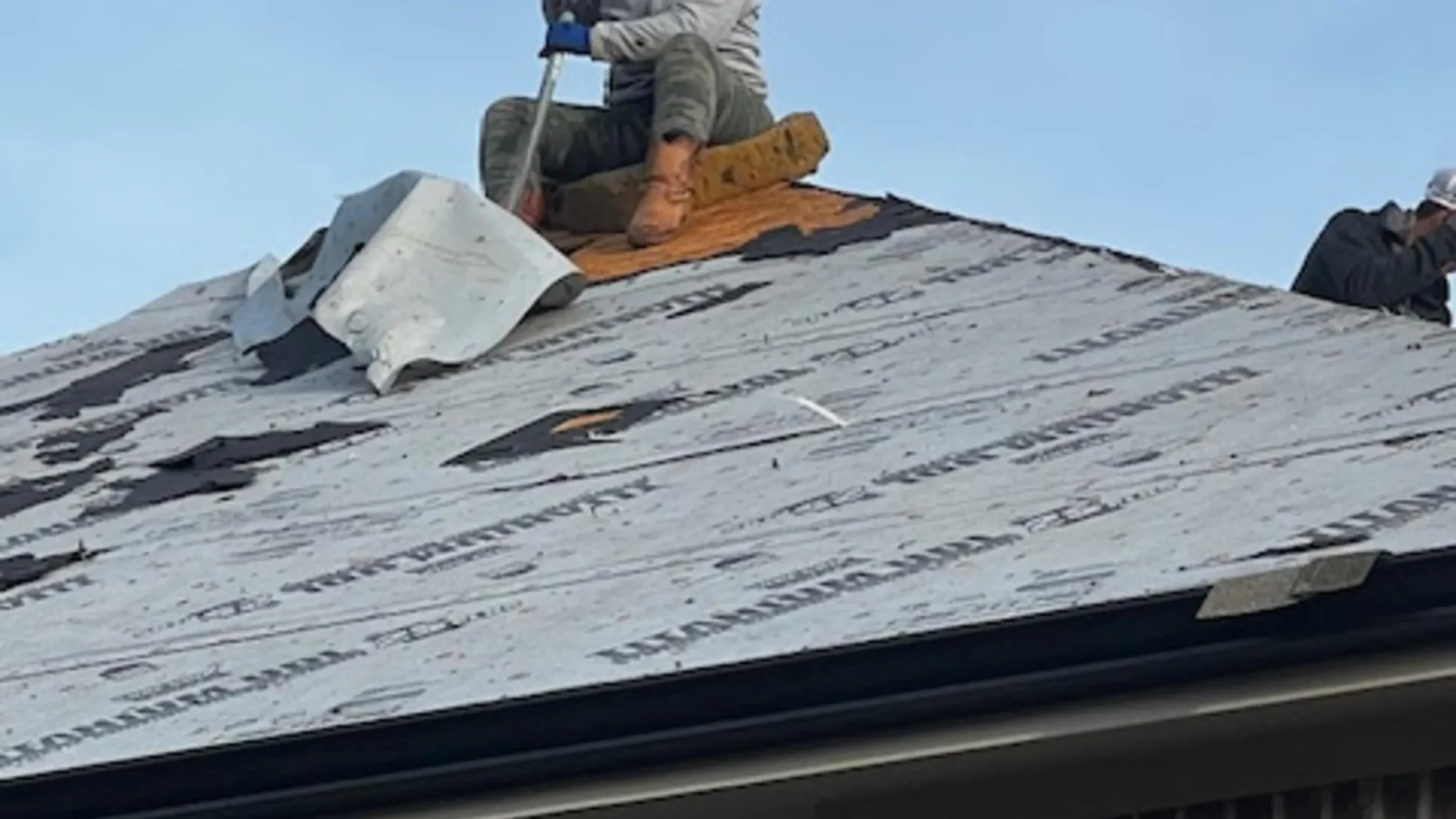
Roof pitch directly affects installation time and safety requirements. Steeper roofs demand additional scaffolding, harness systems, and slower work pace, all of which increase labor costs. Similarly, homes with complex architectural features (turrets, skylights, chimneys, multiple roof planes) require more cutting, fitting, and flashing work, extending project duration from the typical one to three days for simple roofs to five or more days for intricate designs. Geographic location matters: labor rates in the Dallas-Forney corridor tend to run slightly higher than in more rural areas but remain competitive compared to major metropolitan centers.
Contractor experience and crew size also influence pricing. Larger, established companies may charge modestly more but often complete jobs faster and carry better insurance coverage. Seasonal demand affects availability: during peak roofing replacement season (late spring through early fall, when weather cooperates and homeowners address storm damage), crews book out weeks in advance. Scheduling during slower winter months may yield modest savings, though temperature restrictions on shingle adhesive application can limit work windows. Always verify that labor estimates include removal of old materials, installation of new underlayment, flashing, ridge vents, and final cleanup.
Budgeting for the Full Scope of Work
Beyond materials and labor, several expenses catch homeowners off guard if not budgeted in advance. Permits and inspections typically cost $200 to $500 depending on your municipality, and local building codes require these for most roofing replacement projects. Underlayment (the water-resistant barrier installed over roof decking before shingles) adds $0.50 to $1.50 per square foot, with synthetic underlayment commanding the higher end but offering superior durability compared to traditional felt paper. Flashing replacement around chimneys, skylights, and roof-to-wall transitions costs $200 to $800 per feature, depending on complexity and material (galvanized steel versus copper).
Ventilation upgrades often accompany a new roof, especially if your attic lacks adequate airflow. Ridge vents, soffit vents, or powered attic fans add $300 to $1,500 to the project but significantly extend shingle lifespan by reducing heat buildup. Structural repairs discovered during tear-off (rotten decking, damaged trusses, inadequate sheathing) can add $500 to $3,000 or more, depending on the extent of damage. Gutter replacement or repair frequently pairs with roofing work; expect $4 to $9 per linear foot for new seamless aluminum gutters, or $800 to $2,000 for a typical home perimeter.
Seasonal pricing fluctuations and supply chain variables also affect final costs. Asphalt shingle prices tend to track crude oil markets, and periods of high demand (such as after widespread hail events across North Texas) can temporarily inflate both material and labor costs as contractors work through backlogs. Homeowners filing insurance claims for storm damage may see costs offset substantially, though deductibles of $1,000 to $2,500 remain common. Coordinating with a restoration company experienced in claims processing streamlines this process, ensuring documentation meets insurer requirements and maximizing reimbursement. Always request a detailed written estimate that itemizes every cost component, from dumpster rental to drip edge installation, so you understand exactly where your budget goes.
How Location Shapes Your Investment
Geography plays a significant role in roofing costs, and Forney homeowners benefit from a competitive market while facing unique climate demands. The Dallas-Fort Worth metropolitan area supports dozens of roofing contractors, creating price competition that keeps labor rates reasonable compared to more isolated markets. Typical total project costs for a 2,000-square-foot asphalt shingle roof in Forney range from $8,500 to $15,000, while metal roofing runs $16,000 to $28,000, and premium materials climb higher. These figures reflect mid-2026 pricing and include materials, labor, permits, and standard tearoff.
Forney’s location in Kaufman County exposes homes to severe weather patterns that influence material selection and pricing. Spring and early summer hail storms, combined with occasional high winds, make impact-resistant shingles a smart investment despite their 10 to 20 percent price premium over standard products. Local building codes may require specific wind ratings or underlayment standards, particularly for new construction, adding incremental cost but ensuring your roof meets modern performance benchmarks. Insurance considerations also factor in: homes in areas with documented hail history may face higher premiums unless equipped with impact-rated roofing, creating a long-term cost-benefit calculation.
Comparing Forney to surrounding communities reveals modest variations. Homes in eastern Dallas or Mesquite may see slightly higher labor rates due to urban density and contractor overhead, while more rural areas east of Forney sometimes offer marginally lower pricing but with fewer contractor options. Rockwall and nearby suburbs track closely with Forney pricing. Home values in Kaufman County have risen steadily, and homeowners increasingly opt for mid-grade to premium materials that match their property investments. When soliciting estimates, ask contractors familiar with North Texas conditions: they understand local weather challenges, building department expectations, and which materials perform best in this specific climate zone. Avoid comparing Forney pricing to national averages, which rarely account for regional storm exposure, labor markets, or material availability.
Making Your Roofing Investment Work
A new roof represents one of the most significant investments homeowners make in their property. Understanding the cost breakdown helps you budget effectively and make informed decisions about materials, labor, and timing. The total expense varies widely based on several factors, from the roofing material you select to the complexity of your home’s structure and the current market conditions in your area.
When planning for a roof replacement, you need clarity on what drives the final price. This guide breaks down the material and labor components so you can approach your roofing project with confidence and realistic expectations.
Material Costs: What You’re Actually Paying For
Roofing materials typically account for 40 to 50 percent of your total project cost. The material you choose affects not only your upfront investment but also your roof’s lifespan, maintenance requirements, and energy efficiency.
Asphalt Shingles
Asphalt shingles remain the most popular residential roofing option in Forney, TX and across the United States. Three-tab shingles cost between $1.50 and $3.50 per square foot for materials alone, while architectural shingles range from $3.50 to $5.50 per square foot. Architectural shingles offer enhanced durability and aesthetic appeal with their dimensional appearance and longer warranties, often lasting 25 to 30 years compared to 15 to 20 years for three-tab varieties.
Metal Roofing Systems
Metal roofing materials range from $5.50 to $14.00 per square foot depending on the metal type and profile. Standing-seam metal roofs sit at the higher end of this range but deliver exceptional longevity, often 40 to 70 years, and superior performance during severe weather events. In areas prone to hail and high winds, metal roofing provides substantial protection that can reduce insurance premiums and minimize future repair costs.
Premium Options
Tile, slate, and specialty materials command premium prices, typically $10.00 to $25.00 per square foot for materials. These options deliver unmatched durability and distinctive aesthetics but require structural evaluation to ensure your home can support the additional weight. When properly installed, these materials can last 50 to 100 years, making them cost-effective over the long term despite higher initial investment.
Additional Material Components
Beyond the primary roofing surface, several components contribute to material costs. Underlayment, which provides a waterproof barrier beneath your shingles or metal panels, typically adds $0.50 to $1.50 per square foot. Drip edge, starter strips, ridge caps, flashing, and ventilation components add another $1.00 to $3.00 per square foot collectively. These elements play critical roles in your roof’s performance and longevity, protecting vulnerable areas where water intrusion most commonly occurs.
Labor Costs: The Skilled Work Behind Installation
Labor typically represents 50 to 60 percent of your total roofing investment. The complexity of your project, roof pitch, accessibility, and regional labor rates all influence this portion of your budget.
Standard Installation Labor
For straightforward asphalt shingle installations on moderately pitched roofs, labor costs generally run $3.00 to $5.50 per square foot. This includes removal of existing roofing material, preparation of the roof deck, installation of underlayment and new roofing material, and cleanup. A typical 2,000-square-foot roof replacement takes three to five days with a crew of four to six workers.
Complexity Factors That Increase Labor
Several conditions increase labor costs significantly. Steep-pitch roofs require additional safety equipment and slower work pace, often adding 25 to 50 percent to labor costs. Multiple roof planes, dormers, skylights, and chimneys increase cutting, fitting, and flashing work. Two-story homes cost more than single-story structures due to access challenges and safety requirements. Difficult access, limited driveway space, gated communities, or homes surrounded by landscaping, adds time and complexity to material delivery and debris removal.
Removal and Disposal
Tearing off existing roofing material and disposing of debris typically costs $1.00 to $3.00 per square foot, depending on the number of existing layers, material type, and local disposal fees. Some jurisdictions limit the number of roofing layers permitted, making removal mandatory rather than optional. Proper removal also allows inspection of the roof deck for damage that requires repair before new material installation.
Deck Repair and Preparation
Once old roofing material is removed, damaged decking often becomes visible. Deck board replacement typically costs $2.50 to $5.00 per square foot depending on material type and extent of damage. In Forney and surrounding areas, moisture damage from roof leaks and severe weather can compromise deck integrity, making this repair essential before proceeding with new roofing installation.
Regional Factors Affecting Costs in Forney, TX
Local market conditions influence both material and labor pricing. In the Dallas-Fort Worth metropolitan area, roofing costs tend to align with national averages but spike following major weather events when demand surges and contractor availability tightens.
Texas weather patterns create unique considerations. The combination of intense summer heat, severe thunderstorms, and periodic hail events accelerates roofing material deterioration. Homeowners often discover damage following spring and early summer storm seasons, creating concentrated demand for roofing services. Planning your project during slower periods, typically late fall through early spring, can sometimes yield better pricing and faster scheduling.
Insurance claims processing represents another regional consideration. Many homeowners in the area file claims after storm damage, and working with a restoration company experienced in claims processing streamlines the approval process and ensures proper documentation of damage and repair scope.
Total Project Cost Examples
For a typical 2,000-square-foot home in Forney, TX, here’s what you might expect:
Asphalt Shingle Replacement (Architectural Grade): Material costs of $7,000 to $11,000 plus labor costs of $6,000 to $11,000 yield a total project cost of $13,000 to $22,000. This range assumes a moderately complex roof with standard pitch and accessibility.
Metal Roof Installation: Material costs of $11,000 to $28,000 plus labor costs of $8,000 to $15,000 result in a total project cost of $19,000 to $43,000. Metal roofing requires specialized installation skills, and the material cost varies significantly based on metal type and profile selection.
Premium Tile or Slate: Material costs of $20,000 to $50,000 plus labor costs of $12,000 to $25,000 bring total project costs to $32,000 to $75,000 or higher. These projects often require structural reinforcement and specialized installation expertise.
Cost-Saving Strategies Without Compromising Quality
While roof replacement represents a substantial investment, several strategies help manage costs without sacrificing quality or longevity.
Timing Your Project
Scheduling your roof replacement during a contractor’s slower season sometimes yields better pricing and more attention from installation crews. Avoid the rush immediately following major storm events when demand peaks and pricing increases accordingly.
Material Selection Balance
Choose materials that balance upfront cost with long-term value. Mid-grade architectural shingles often provide the best combination of durability, aesthetic appeal, and cost-effectiveness for most homeowners. Premium materials make sense when you plan to remain in your home long-term and want to minimize future maintenance and replacement expenses.
Address Issues Early
Minor roof damage escalates quickly when left unaddressed. Regular inspections and prompt repairs extend your roof’s lifespan and delay the need for full replacement. Small investments in maintenance and targeted repairs save substantially compared to premature replacement of an entire roof system.
Insurance Claim Assistance
When storm damage occurs, proper documentation and claims processing ensure you receive appropriate coverage for repairs or replacement. Working with professionals experienced in insurance claims helps maximize your coverage and minimizes out-of-pocket expenses.
What to Expect During the Installation Process
Understanding the installation timeline and process helps you prepare for the disruption and ensures quality results.
Most residential roof replacements take three to five days from start to finish, though complex projects or weather delays can extend this timeframe. The process typically begins with material delivery, followed by tear-off and disposal of existing roofing. Crews then inspect and repair the roof deck, install underlayment and starter strips, lay the primary roofing material, install ridge caps and flashing, and complete final cleanup and inspection.
Expect noise and vibration throughout your home during tear-off and installation. Protect fragile items inside, secure loose objects in your yard, and plan to keep children and pets away from the work area. Most contractors provide dumpsters for debris removal and use magnetic tools to collect stray nails, but you should inspect your property carefully after completion.
Evaluating Contractor Quotes
When comparing estimates, look beyond the bottom-line price. A comprehensive quote should itemize material costs by type and quantity, specify labor costs including removal and disposal, detail deck repair allowances or note that deck condition will be assessed after removal, list warranty coverage for both materials and workmanship, and provide a clear timeline for project completion.
Be cautious of quotes that significantly undercut competitors. Extremely low bids often indicate shortcuts in material quality, inadequate insurance coverage, or inexperienced crews. A roof replacement done poorly costs far more to correct than paying a fair price initially for quality work.
Verify that your contractor maintains proper licensing, carries both general liability and workers’ compensation insurance, and provides references from recent projects. Check online reviews and ask about their experience with your specific roofing material and home style.
Long-Term Value Beyond Initial Cost
While the upfront investment in a new roof feels substantial, consider the long-term value you receive. A quality roof replacement protects your home’s structure from water damage, improves energy efficiency by enhancing insulation and ventilation, increases property value and curb appeal, and provides peace of mind through warranty coverage and storm protection.
In Forney and the surrounding Dallas-Fort Worth area, a well-maintained roof withstands the demanding climate and protects your home through years of temperature extremes and severe weather. The right material selection and quality installation deliver returns that extend well beyond the initial project cost.
Making Your Roofing Investment With Confidence
Understanding the breakdown of material and labor costs empowers you to budget appropriately and make informed decisions about your roof replacement. Every home presents unique considerations, from architectural features to material preferences to budget constraints, and the right approach balances all these factors.
Whether you need a complete roof replacement, have questions about material options for your home, or want to assess storm damage and explore insurance claim options, working with experienced professionals ensures your investment delivers lasting protection and value.
For homeowners in Forney, Dallas, Rockwall, and surrounding communities, Imperial Roofing and Restoration provides comprehensive roofing services backed by detailed project estimates that clearly separate material and labor costs. Our team helps you evaluate options, understand your investment, and make decisions that protect your home for years to come. Contact us at (214) 505-9369 or visit our contact page to schedule a consultation and receive a detailed cost breakdown for your roofing project.
